

20 Warning Signs That a Senior Should Not Be Cooking Anymore
A few months ago, I got a call from a woman named Priya in Schaumburg. Her father, who is eighty-three, had left the gas burner on for the second time in a month. The first time, her mother caught it. The second time, a neighbor smelled it from the hallway. Nobody was hurt, but Priya was shaken. She told me, “I don’t know how to tell him he can’t cook anymore. He’s been making his own breakfast every morning since before I was born.” That phone call stuck with me, because we hear some version of it almost every week at Meal Village. A daughter who found burn marks on her mother’s arms. A son who noticed the smoke alarm going off every other evening. A wife who realized her husband had been eating the same bowl of cereal for dinner, three nights in a row, because he’d quietly given up on cooking but didn’t want to say so. The thing is, nobody wakes up one morning and suddenly can’t cook. It’s gradual. And because it’s gradual, families often don’t catch it until something scary happens. So I have put together the warning signs we hear about most often as it can prevent a lot of heartbreak later.
Kitchen Safety Signs
These are usually the first things families notice, because they leave physical evidence. Burn marks, scorched pots, the smell of gas. They’re hard to miss once you start paying attention, and they tend to be the signs that finally start the conversation.
1. Burn marks on hands, arms, or clothes
Small kitchen burns happen to everyone. But when you start seeing them frequently, that’s different. Burn marks on fingers, melted sleeves, bandages that keep showing up. It usually means reaction time has slowed down, or hands are shakier than they used to be. And the problem is that hot oil, boiling water, and heated pans don’t wait for you to react. A slow hand near a hot stove can lead to a serious injury very quickly.
2. Pots and pans left on the stove and forgotten
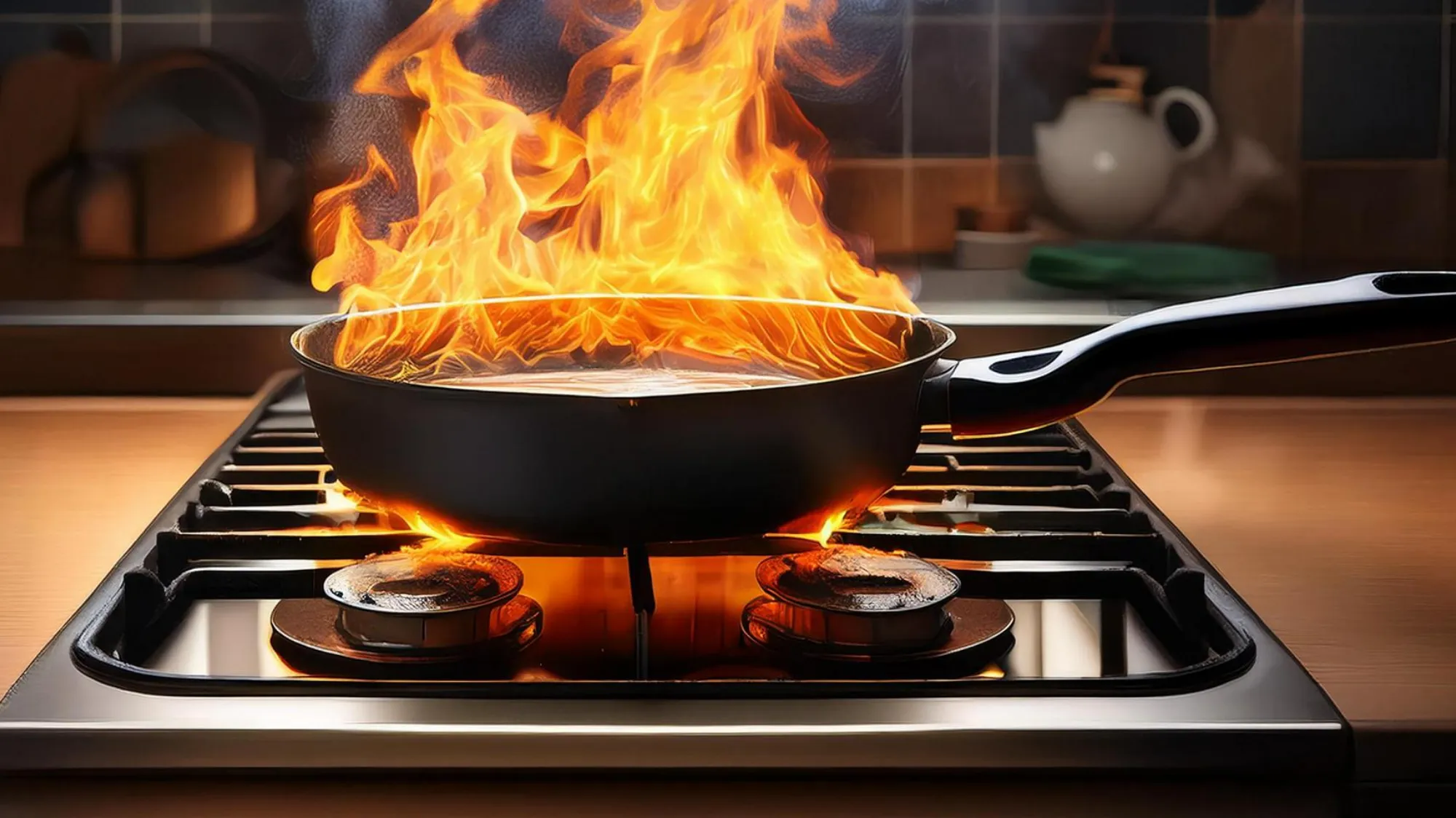
This is one of the most dangerous signs, and it’s the one that comes up in almost every conversation we have with concerned families. A pan left heating with nothing in it. Water that’s boiled away completely. Food that’s been cooking for an hour past when it should have been taken off. Even one forgotten pot can start a fire, so if this has happened more than once, cooking alone is no longer something that should continue without serious changes.
3. Food burned often, or smoke alarms going off regularly
Burning something once in a while is normal. We’ve all done it. But when food is coming out blackened on a regular basis, or the smoke alarm has started going off during cooking more than it used to, something has shifted. It usually means the person is walking away from the stove, or losing track of time, or falling asleep while something is on the heat. And each one of those is a recipe for a fire.
4. Leaving the gas or stove on after cooking
This is the one that scares families the most, and for good reason. Smelling gas in the kitchen, finding a burner still glowing hours after dinner, a stove left on with nothing on it. Gas left running can lead to poisoning, fire, or worse. If this has happened even once, it needs to be taken seriously. And if it’s happened more than once, the stove should not be used without a shut-off device or supervision.
5. Putting metal or wrong items in the microwave
When someone puts a metal spoon in the microwave, or wraps food in foil and heats it, or places a plastic container directly on a hot burner, it’s a sign that judgment and awareness have started to slip. These aren’t careless mistakes. They point to confusion about what’s safe and what isn’t, and that kind of confusion in a kitchen can cause a fire in seconds.
6. Using unsafe items on the stove
Plastic containers melting on burners, paper plates placed on a hot surface, utensils that aren’t meant for heat being used near open flames. When you see this kind of thing, it usually means the person isn’t fully processing what’s safe anymore. And the kitchen is one room where that gap between knowing and doing can turn dangerous very fast.
These kitchen safety signs are often the clearest early warning that something has changed. They don’t mean a senior has failed at anything. They just mean the situation is different now, and it’s time to pay closer attention.
Memory and Focus Problems
Cooking asks more of the brain than people give it credit for. You’re tracking time, switching between tasks, remembering steps, and making quick decisions. So when memory or focus starts slipping, the kitchen is one of the first places where it shows. These signs are often quieter than a burned pan or a smoke alarm, but they matter just as much.
7. Forgetting recipes they’ve made for years
This one is painful for families to witness. A parent who asks how to make a dish they’ve cooked for forty years, or who mixes up the steps in a recipe they could have done in their sleep. It’s not about trying something new and getting confused. It’s about losing recall of something deeply familiar, and that shift often points to early memory decline. When the recipes that have been second nature for decades start slipping away, it’s worth taking note.
8. Forgetting that food is cooking
This comes up more than any other memory-related sign. A senior starts cooking, walks into the living room, and completely forgets there’s something on the stove. Or sits down to watch TV and doesn’t come back until the smoke alarm pulls them out of it. Some families have told us their parent left the house entirely while food was still on the heat. It shows that the ability to hold attention, even for short stretches, is starting to break down. And in a kitchen, a fifteen-minute lapse is all it takes for a fire to start.
9. Leaving food out all night
Cooked food left sitting on the counter overnight, meat or dairy that’s been out for hours, leftovers that never made it into the fridge. It might not seem like a big deal compared to a burned pan, but spoiled food is a real health risk for older adults. Their immune systems are more vulnerable, and food poisoning that a younger person might shake off in a day can put a senior in the hospital.
10. Not remembering whether they already ate
When someone eats the same meal twice because they forgot they already had it, or skips meals without realizing, or says “I think I ate” but isn’t sure, that’s a sign that daily awareness is fading. Over time, this leads to weight loss, low energy, and poor nutrition, because the person isn’t keeping track of what their body needs anymore.
11. Trouble following simple steps
Cooking is really just a sequence of small steps done in order. And when focus starts to drop, even easy tasks start to feel overwhelming. You might see someone skip steps, like forgetting to turn off the stove when they’re done. Or they mix things up, doing step three before step one. Or they just freeze in the middle of cooking, unsure of what comes next. Each of these moments creates an opening for a mistake, and in a kitchen, mistakes come with real consequences.
Memory and focus problems don’t always look serious at first. They sneak in quietly. But in the kitchen, even small lapses can lead to big dangers, so it’s important to catch them early.
Physical Problems
Even when memory is sharp, the body can make cooking unsafe. The kitchen demands a lot physically. You’re standing, lifting, gripping, reaching, and moving around a room with hard floors, sharp tools, and hot surfaces. So when strength, balance, or vision starts to go, the risk of accidents goes up with it.
12. Shaky hands or weak grip
Cooking needs steady, strong hands. You’re holding knives, gripping pan handles, lifting lids off boiling pots. So when hands start trembling, or dishes and utensils are getting dropped more often, or a pot handle that used to feel easy now feels like a struggle, the kitchen has quietly become a more dangerous place. A shaky hand near a hot stove or a sharp blade can lead to a burn or a cut in a split second.
13. Trouble standing for a long time
Most meals take at least fifteen to twenty minutes of standing in one spot. If that’s become uncomfortable, or if a senior needs to sit down every few minutes during cooking, it creates a chain of problems. They leave the stove unattended to rest, they lose focus because they’re tired, and they rush through steps to get off their feet faster. All of which makes mistakes more likely.
14. Poor balance or recent falls
Balance issues in the kitchen are a serious concern. The floors are hard, there’s often water or grease on the tile, and you’re regularly carrying hot or heavy things from one spot to another. If a senior has been grabbing onto the countertop for support, or is nervous about moving around while holding food, or has actually fallen in the kitchen recently, the risk of a bad injury is real. A fall while carrying a pot of hot water or soup isn’t just a fall. It’s a fall plus a burn, and that combination can be devastating for an older person.
15. Vision problems
Good eyesight matters more in the kitchen than most people realize. If someone can’t clearly read the stove settings, or misses a puddle of water on the floor, or doesn’t notice that a burner is still glowing, they’re cooking without the information they need to stay safe. I’ve talked to families who only realized the severity of the problem after a parent tripped over something on the floor they simply hadn’t seen.
16. Trouble lifting pots or opening jars
Cooking involves a surprising amount of heavy lifting. Full pots of water, cast iron pans, jars with tight lids. When a senior starts struggling with these things, or avoids certain meals because they can’t manage the lifting, or asks for help with jars and lids every time, it’s a sign that the physical demands of cooking are starting to outpace what the body can handle. And trying to push through that gap is how spills, burns, and dropped pots happen.
Physical changes are a normal part of getting older, and there’s no shame in any of them. But when they start affecting what happens in the kitchen, it’s time to think about what needs to change so that the person stays safe.
Health and Hygiene Issues
Kitchen safety isn’t only about fire and burns. Food hygiene matters just as much, because for older adults, a bout of food poisoning can be far more serious than it would be for someone younger. These signs are easy to overlook, but they can quietly put a senior’s health at risk.
17. Undercooked food or eating spoiled food
Meat that’s still pink inside, food that’s been heated unevenly, meals that clearly haven’t cooked long enough. Or on the other side, food that’s past its expiration date, leftovers that smell off but get eaten anyway, moldy bread that doesn’t get thrown out. As people age, their sense of smell and taste weakens, so they can’t always tell when food has gone bad. And what might give a younger person an uncomfortable evening can land an older person in the emergency room.
18. A kitchen that’s no longer being kept clean
Dishes piling up for days, food stuck on pans, counters that haven’t been wiped, trash that isn’t going out on time. A messy kitchen isn’t just unpleasant. It attracts bacteria and pests, and it makes the cooking space itself less safe. When a kitchen that used to be spotless starts looking neglected, it often points to a bigger decline in the person’s ability to manage daily tasks. And cooking in an unsanitary space adds a health risk on top of everything else.
Hygiene issues are often the ones families feel awkward bringing up. But for seniors, even small lapses in food safety can lead to serious illness, so they’re worth paying attention to.
Emotional and Behavioral Signs
Not all the warning signs are visible. Some of them are things you hear, or things you feel in a conversation. When cooking starts to cause fear, frustration, or stress instead of comfort, that shift matters. It tells you something has changed in how the person relates to their own kitchen.
19. Getting confused, upset, or angry while cooking
Stopping mid-task and looking lost. Asking the same question three times in a row. Snapping at someone who tries to help, or saying things like “I just can’t do this anymore.” When cooking starts producing frustration or confusion instead of satisfaction, it’s usually because the person can feel that something isn’t right, even if they can’t name exactly what it is. And that frustration often leads to rushed decisions, careless moments, and accidents.
20. Avoiding cooking altogether, but not eating well
This is the silent one. The sign that nobody sees because there’s nothing dramatic to point to. A senior who quietly stops cooking, who starts eating crackers for dinner, or toast for every meal, or just skips eating some days because the kitchen feels like too much. It might look like a choice, but most of the time it’s not. It’s surrender. The person has already decided, somewhere in the back of their mind, that cooking is too hard or too scary. They just haven’t told anyone. And in the meantime, their nutrition falls apart, their energy drops, and their health starts to slide.
Emotional signs are easy to dismiss, because they don’t leave burn marks or set off smoke alarms. But they’re often the truest indicator of where things really stand, because the person is telling you, in their own way, that they need help.
Clear Red Flags That Mean Cooking Should Stop
Some signs are gradual and call for adjustments. But a few are serious enough that waiting is no longer the right move. If any of these have happened, it’s time to make changes right away. A fire in the kitchen, even a small one, is a major warning. It doesn’t matter if it was caught quickly. A fire means something went very wrong, and the conditions that caused it are likely to cause it again. Gas left on more than once is extremely dangerous. If the stove has been left running and a family member or neighbor had to catch it on multiple occasions, this is not a habit that reminders will fix. It puts the senior and everyone around them at risk. Serious burns that need medical attention, like large blisters, deep burns, or injuries from falling with hot food, tell you that reaction time, balance, or judgment has declined past the point where cooking is safe. And if a doctor has raised concerns about memory loss, balance, or the ability to handle daily tasks safely, the kitchen should absolutely be part of that conversation. Medical advice like that shouldn’t be set aside when it comes to an activity as risky as cooking. These aren’t about independence or pride. They’re about preventing an injury, a fire, or something worse. When these signs show up, the time for small adjustments has passed.
What Families Can Do Next
Once you’ve seen the signs, the next question is always: what now? And how you handle this matters just as much as what you decide to do. Because if a senior feels like cooking is being ripped away from them, they’ll resist it, and rightfully so. The goal is safety without taking away dignity.
Don’t take cooking away all at once
Sudden changes cause fear and resentment. Instead, start small. Reduce the riskiest parts of cooking first, like frying or using the gas stove, and keep the routines that are still safe. A gradual shift feels more respectful, and it’s much easier for the person to accept.
Have the conversation with care
These talks can get emotional fast. Try to lead with concern, not criticism. Say “I worry about your safety” instead of “You can’t cook anymore.” Focus on what you’ve noticed rather than what’s wrong with them. That small difference in framing makes a big difference in how the conversation goes.
Add safety devices to the kitchen
Stove knob covers, automatic shut-off devices, turning off the gas supply when it’s not being used. These are small changes that lower the risk without requiring someone to stand in the kitchen watching. They give families peace of mind, and they give seniors a bit more room to keep doing what they can safely.
Switch to meals that only need reheating
This is one of the safest and simplest steps a family can take. No open flames, no long cooking times, no standing over the stove. Just a warm, proper meal that’s ready in a few minutes. A lot of seniors we’ve worked with at Meal Village have told us they actually felt relieved once the pressure of daily cooking was lifted. They didn’t lose their independence. They got their evenings back.
Keep a close eye on eating habits
Even after making changes, keep watching. Is the person actually eating? Are they losing weight or energy? Are meals being skipped? Because safety in the kitchen is only half the picture. The other half is making sure the person is actually getting good, nourishing food every day. And that’s where having a reliable meal plan in place makes all the difference.
How Meal Village Can Help
This is why Meal Village exists. We built this for families like Priya’s, and like the dozens of others who reach out to us every month with the same worry: my parent shouldn’t be cooking every day, but they still deserve real food. We prepare fresh meals from scratch and deliver them right to your door in Chicago and the nearby suburbs. No frozen trays, no institutional taste. Just honest, home-style food that a senior can heat up in a few minutes and sit down to enjoy. It takes the stove out of the equation without taking away the comfort of a warm meal. For families, it’s one less thing to worry about. And for seniors, it’s good food on the table every day, without the risk.
Ready to try it? Order fresh meals from Meal Village today.
A Final Thought
I think about Priya’s dad sometimes. He cooked his own breakfast every morning for over fifty years. That’s not just a habit. That’s identity. And asking someone to let go of a piece of their identity is never going to be easy, no matter how necessary it is. But here’s what I’ve seen over and over again, working with families across Chicago: the seniors who transition well aren’t the ones who were forced to stop. They’re the ones whose families noticed the signs early, had the conversation with love, and found solutions that kept the food good and the kitchen safe. They still feel taken care of. They still eat well. And most of them, when you ask, will tell you they’re relieved someone finally stepped in. If you’re reading this because you’ve started noticing some of these signs in someone you love, trust what you’re seeing. The conversation might be uncomfortable, but having it now is so much better than waiting for something to go wrong. Your parent cooked thousands of meals over a lifetime. Honoring that means making sure their next chapter is safe, well-fed, and full of dignity.