

What to Do When Every Family Member Wants Something Different for Dinner
Quick Summary
- Couples argue about dinner 156 times a year. Over half of people surveyed dread "what do you want for dinner?"
- The nightly dinner conflict isn't about food preferences. It's about one person carrying the mental load of feeding the family alone.
- Picky eating in children peaks between ages 2 and 6. It's a documented developmental stage, not bad parenting.
- Mothers handle 71% of household tasks requiring mental effort and 79% of daily responsibilities like cleaning and childcare.
- Redefine a successful dinner: everyone at the table, eating something, nobody crying, you sitting down too.
- Component meals let everyone customize from the same ingredients in 20 to 30 minutes. No extra cooking.
- 3 evidence-backed rules end mealtime battles: stop commenting on food, keep a safe food on the table, let everyone serve themselves.
- Strategies only last when the mental load is shared. Assign specific nights and tasks, not vague requests for "help."
- Some nights will still fall apart. That's built into the plan, not a sign you failed.
The chicken took 40 minutes. You seasoned it, roasted it, made the rice the way everyone used to like it. Your 7-year-old took one look and said no. Your 4-year-old wanted pasta. Your partner, still looking at their phone, asked if you'd thought about just ordering something.
You scraped the plates, ate standing over the sink, and spent the rest of the night wondering why dinner always ends like this.
You're not a bad cook. You're not even bad at this. But dinner has become your department. Planning, shopping, deciding, cooking, negotiating, cleanup. Nobody in your house sees the weight of that job because they only see the plate.
This article won't give you a recipe that magically makes everyone happy. It will show you why dinner feels this hard (it's not about the food), and give you a framework you can start tonight: component meals, 3 mealtime rules, and a plan for sharing the load.
Couples Argue About Dinner 156 Times a Year, and It's Never Really About the Food
The average couple argues about what to eat for dinner 156 times a year. 3 times a week, someone asks "what do you want for dinner?" and it goes sideways. Over half of people surveyed dread the question.
But the argument is never about tacos versus pasta.
Dinner is the one daily task that requires a decision from everyone, happens on a deadline, and falls apart publicly when it goes wrong. Your kid refusing the meal doesn't just mean wasted food. It means your 40 minutes were for nothing, and nobody noticed.
We hear this constantly from the families we work with. One mom told us she tried making 2 separate dinners every night for a month. "I almost lost my mind," she said.
The cooking wasn't the breaking point. She was the only one who saw a problem, planned a solution, executed it, and still got complaints.
That guilt you feel about the delivery spending, the nutrition, the frozen fish sticks, the feeling every other family has this handled? The guilt has nothing to do with cooking. You're carrying a job nobody gave you a title for, and nobody offers to share.
Picky Eating Is Developmental, Decision Fatigue Is Real, and Neither Is Your Fault
Your 4-year-old isn't trying to ruin dinner. Food rejection in young children is a documented developmental stage that peaks between ages 2 and 6. A Frontiers in Pediatrics study found picky eating affected 26.5% of children at 18 months, rose to 27.6% at age 3, then gradually declined to 13.2% by age 6. Longitudinal research puts the number higher: nearly half of all children go through a picky phase, and for 40% of them, it lasts 2 or more years.
Young children are biologically wired to reject unfamiliar foods. It's called neophobia, and it peaks during the years they're also developing autonomy. Food is one of the few areas where a 4-year-old has genuine power. Saying "no" to broccoli isn't defiance. It's development.
- Decision fatigue is cumulative. After a full day of work and household decisions, even choosing between 2 takeout menus feels paralyzing.
- Taste preferences diverge in any household. One person wants comfort food, another is watching sodium, a third isn't hungry.
- Dietary needs compound everything. An allergy, a vegetarian, a medical diet. Every restriction multiplies the planning.
- Schedules clash. Someone has practice at 6. Someone else works late. The window for a shared meal keeps shrinking.
None of this is your fault. You're up against child development, cognitive overload, and the logistics of feeding different humans from one kitchen every night.
You're Not Stressed About Cooking. You're Stressed About Carrying It Alone
The exhaustion you feel at 5pm isn't about cooking. It's about being the only person in your household who thinks about dinner before it's time to eat.
A 2024 study from the Journal of Marriage and Family surveyed 3,000 parents and found that mothers handle 71% of household tasks requiring mental effort. For daily responsibilities like cleaning and childcare, the number is even higher: 79%. And when researchers asked fathers to estimate their share, they consistently overestimated.
Think about what "dinner" requires. Remembering who won't eat what. Checking the fridge. Choosing between 3 flawed options. Shopping or ordering. Timing it all so it's ready when everyone converges, cooking, serving, fielding the complaints, cleaning up. Then doing it again tomorrow.
When your partner texts "what's for dinner?" at 4:30, they're not asking a question. They're confirming that dinner is your department.
We talk to families dealing with this every week. One woman we spoke with had spent years cooking for her brother's family, adjusting every meal around everyone else's preferences. She finally hit a wall. "I've been trying to make things everyone can enjoy but it seems impossible," she told us. "I just want to cook what I've always made."
The resentment ran deeper than recipes. She'd become the permanent, unpaid dinner department for people who never considered what that costs.
If you recognize that feeling, you're not failing at dinner. You're carrying a job that was never meant for one person.
What a Good Dinner Actually Looks Like: Everyone
Eats Something, Nobody CriesIf your picture of a successful dinner involves everyone eating the same thing and complimenting the cook, you're measuring against something that doesn't exist.
An American Heart Association survey found that 91% of parents say their family is less stressed when they eat together. Not when they eat the same thing. When they eat together. The benefit comes from the togetherness, not the menu.
A more useful definition of a good dinner: everyone at the table. Eating something. Nobody crying. You sitting down too.
That last part matters. If "dinner worked" still means eating cold leftovers at the counter after everyone else is done, you're absorbing the cost.
A woman we work with has been cooking family dinners for over 20 years. Her teens still sometimes opt for cereal. Her husband occasionally checks out. "The magic dinners," she says, "where everyone likes the food AND is actually present? Those happen a few times a month. Maybe." After 2 decades, her standard is sustainability.
Redefining success is the first real strategy, not a concession. Component meals, mealtime rules, and shared planning only work once you stop trying to make every dinner a production.
One Dinner, Everyone's Plate: How Component Meals End the Nightly Standoff
The trap most families fall into is binary: either you cook one meal and someone goes hungry, or you cook multiple meals and lose your evening. Component meals break that pattern.
You cook the parts separately and let everyone build their own plate. Same ingredients, same time. The only difference is presentation.
As registered dietitian Katie Serbinski writes at Mom to Mom Nutrition, deconstructed family dinners "give me a higher percentage of actually eating a hot meal WITH my family" because they lead to "more time for mealtime conversation that doesn't revolve around complaints or demands."
4 weeknight examples:
- Taco or burrito bar: Season the meat, cook the rice, open the beans. Set out cheese, salsa, lettuce, sour cream. Everyone builds their own. Your 4-year-old eats a plain tortilla with cheese. Your partner loads everything. You sit down.
- Grain bowl night: Rice or quinoa base, roasted chicken or tofu, a sheet pan of vegetables, 2 sauces. The picky eater takes rice and chicken. The vegetarian skips the chicken. Done.
- Pasta station: Cook one pot of pasta. Offer marinara and pesto. Protein and vegetables on the side. The kid who hates "mixed together" food eats plain pasta with butter.
- Stir-fry build: Rice in one pot, stir-fried vegetables in another, protein in a third, sauces on the table. Everyone assembles. Total active time: 25 minutes.
If someone in your family is gluten-free, swap the tortilla or pasta for a rice-based option. If someone is dairy-free, the toppings bar already handles it. The approach handles dietary restrictions instead of multiplying your workload.
When even 25 minutes is too much, a prepared protein from a meal delivery service fills the same role. Same framework, one less step.
Stop Commenting, Add a Bread Basket, Let Them Serve Themselves
"Don't force them to eat" is advice every parent has heard and almost nobody knows how to follow. These 3 rules turn that vague idea into a system.
The Division of Responsibility
Registered dietitian and family therapist Ellyn Satter built a model supported by decades of published research and endorsed by Canada's national food guide. The rule is clean: you decide what food is offered, when it's offered, and where it's served. Your child decides how much they eat and whether they eat at all.
That means you stop commenting. Stop saying "just try one bite" and "you liked this last week." Stop making the face when they push the plate away. Research suggests pressure can worsen picky eating — and the relationship goes both ways, with pickiness also provoking more pressure from parents. Comments about food, even gentle ones, can register as pressure to a young child.
The Safe Food Rule
Always put one food on the table you know your child will eat. Bread, rice, fruit, whatever their reliable food is. This ends the "there's nothing I can eat" spiral without cooking a separate meal.
Family-Style Serving
Put everything in bowls at the center of the table. Everyone serves themselves. For young children, this IS the autonomy they're fighting for. Food isn't on their plate against their will. It's right there. They choose.
Patrick Coleman wrote about this transformation for Fatherly. For 2 years, family dinners at his house were "a bleak culinary battleground" with his sons, ages 7 and 5. Then they backed off. "We just stopped saying anything," he wrote. On day 3, his son absently nibbled a piece of unbreaded chicken. "The 7-year-old giggled and chewed."
They change presentation and response, working with your child's development instead of against it.
Dinner Works When It's Not One Person's Department
Component meals and mealtime rules work. For about a week, if you're the only one running them. Then you're back to exhausted, because you're still planning the meals, buying the ingredients, prepping the components, and remembering who won't eat what. Strategies only stick when someone else starts sharing the thinking.
That starts smaller than you'd expect:
- Pick one night a week where each family member chooses the meal, kids included. A 6-year-old who picked "pizza night" now owns something. That's one fewer decision on your list.
-
Give kids age-appropriate tasks. A 4-year-old can wash vegetables and set the table. An 8-year-old can assemble their own plate and help with sides. A teenager can own an entire weeknight dinner from planning to cleanup.
-
Have the specific conversation. Not "can you help more with dinner?" but "I need you to own Tuesday and Thursday from planning to table." Vague requests get vague results. Name the nights, name the tasks, transfer the thinking.
-
If you're parenting alone, kid involvement IS the redistribution. A 5-year-old helping you wash lettuce isn't just learning a life skill. They're carrying part of the load, and you're not doing it entirely by yourself.
When nobody has bandwidth to cook, prepared meals fill the gap. A service like Meal Village requires no subscription, so you use it only when you need it.
Some Nights Will Still Be DoorDash and Tears. And That's Part of the Plan
You're going to have a Tuesday where the 4-year-old screams, the 7-year-old eats nothing but bread, and you end up ordering delivery while standing in a kitchen full of untouched food. That's not the system failing. That's a Tuesday.
Patrick Coleman's son nibbled chicken on day 3. The full shift took weeks. One study included in a systematic review in the International Journal of Behavioral Nutrition and Physical Activity found that 56 of 88 parents reported having a picky eater in the house, but only 36 found it disruptive. More than half found a rhythm. The rhythm didn't look like the one they originally planned.
That said, there's a line between a bad week and a real concern. Children's Mercy Hospital recommends talking to your pediatrician if:
- Picky eating persists well past age 4 or 5
- Your child shows extreme distress when others eat certain foods around them
- Their limited eating is affecting their energy or growth
- Food anxiety is keeping them from activities like birthday parties or school lunches
Those are worth a professional conversation.
For everything else, the goal was to have a plan for the normal ones and the self-awareness to know the difference.
Same kitchen. Same weeknight.
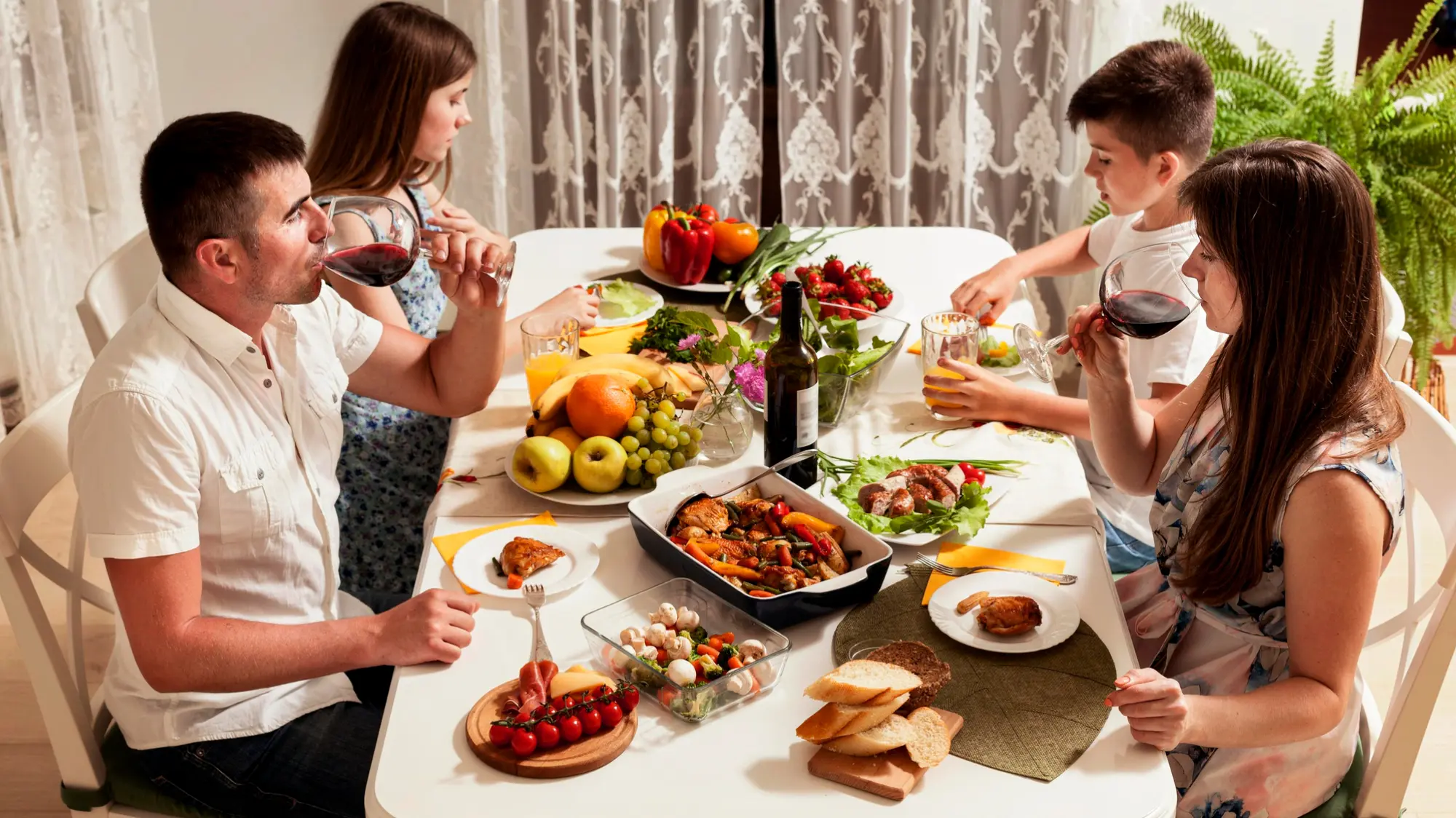
Protein is in bowls at the center of the table next to rice and bread. Everyone serves themselves. Your 7-year-old takes rice and 2 pieces of bread. You don't say anything. Your 4-year-old puts one piece of chicken on her plate, pokes it, and eats the rice. You don't say anything about that either.
Your partner planned this meal. It's their night.
You sit down. You eat something warm, at the table. Nobody's crying. It's not a magazine dinner. It's a Tuesday. And it's enough.